
)
)
)
The Face of Mercy in South Sudan
)
Introduction
As we prepare to celebrate 200 years since Catherine McAuley founded the first House of Mercy and a charism rooted in forgiveness, healing, restoration and preferential love for the poor, Scholasticah Nganda RSM, reflects on what Mercy is teaching her through a ministry of advocacy with women and girls in South Sudan.
Scholasticah is the Alumnae Director - East Africa with Mercy Beyond Borders. This is her #Mercy200Story:
Mercy Beyond Borders
There are moments in ministry when a conversation continues long after the person has walked away. I have experienced many such moments in South Sudan. They have challenged my understanding of what it means to be a Sister of Mercy and have slowly taught me that sometimes Mercy begins not with an answer, but with the courage to remain present.
Part of our Constitution says: Mercy, the source of forgiveness, healing and restoration, and its preferential love for the poor is the characteristic spirit of our congregation.’ (Constitutions, (#3.1)
In South Sudan, I am discovering what these words look like when they become flesh.
The woman who needed someone to listen
One of the most significant parts of my ministry has been regular accompaniment of Mercy Beyond Borders (MBB) alumnae. I often begin a conversation expecting to hear about advocacy activities, community initiatives or the progress of a particular programme. But sometimes the conversation takes a completely different direction.
A woman begins speaking about her work, and gradually the conversation moves into the realities of her family, her responsibilities, her struggles and the pressures she carries. I listen.
And sometimes, after such encounters, I have found myself wondering: Is this really what I am supposed to be doing? Am I empowering communities, or am I simply accompanying women through their pain?
This question has become a turning point for me. I am learning that listening is not doing nothing. For a woman who has carried her struggles silently, being heard can be the beginning of healing. Being accompanied can restore confidence. And when she begins to recognize her own strength, accompaniment can become empowerment. Mercy has taught me not to rush past the person in order to get the programme completed.
The girl whose future is bigger than her circumstances
Another encounter that has stayed with me is my engagement with girls whose dreams of education are threatened by the realities around them.
When I think about girls in places such as Narus-Torit diocese, my place of ministry, and other communities in South Sudan, I am struck by the determination that exists alongside vulnerability. A girl may simply want what many of us take for granted: to remain in school, to learn, to have choices about her future and to become someone who can contribute to her community. But poverty, insecurity, social pressures and other realities can make that dream fragile.
Standing with girls therefore requires more than encouraging them. It requires us to ask difficult questions about the conditions that prevent them from flourishing. This is where my ministry of advocacy becomes deeply connected to Mercy.
Mercy cannot simply look at a girl struggling to access education and say, ‘I am sorry for you.’ Mercy asks, ‘What is happening here, and what can we do together to change it?’
It moves from compassion to action. It seeks to restore not only what has been lost, but also the possibility of a different future.
The Mercy Beyond Borders (MBB) alumnae who are becoming advocates
Perhaps one of the most hopeful things happening now is that the women who were once beneficiaries of MBB are increasingly becoming voices for change themselves. Their experiences have given them a particular understanding of the realities facing women and girls in South Sudan. Through accompaniment and advocacy, we are exploring how their own stories can become a platform for speaking about education, women empowerment and sustainable peace. This is where I see something beautiful happening.
In the photo below, an MBB alumna gives a motivational talk to St. Bakhita Girls’ Secondary School students, encouraging them to remain focused in their studies. She emphasized that education has the power to transform their lives and that of their families and communities.
Photo used with permission from MBB advocacy Director- East Africa.
)
The woman who once needed support can become the woman who supports another. The person who experienced vulnerability can become an advocate for someone else’s dignity. A personal struggle can become a source of compassion for a community. This is restoration! And it reminds me that empowerment does not always happen in a straight line. Sometimes it begins with a wound, moves through accompaniment, and eventually becomes a source of strength for others.
What is Mercy teaching me now?
These three encounters have changed my understanding of my own ministry. I came to work with MBB in South Sudan wanting to see visible results. I wanted to know that the alumnae programme was achieving its objectives and that communities were becoming empowered and girls were being taken, and retained in schools. But South Sudan has taught me to value something deeper: relationship.
I am slowly learning that Mercy is not pity. It is not rescuing people. It is not speaking for people when they can speak for themselves. Mercy is drawing near. It is listening. It is standing with. It is defending dignity. It is creating spaces where people can rediscover their own voices. And when necessary, it is having the courage to challenge the structures and circumstances that keep people vulnerable. In this sense, mercy has changed me. I have become more comfortable with not having immediate answers. I have learned that I cannot fix every situation I encounter. But I can listen. I can accompany. I can advocate. I can help create spaces where another person discovers that she is not powerless.
From Dublin to South Sudan
As we celebrate 200 years of the Founding of the First House of Mercy, I cannot help but see the connection between what is happening in South Sudan today and what Catherine McAuley began in Dublin.
Catherine saw poverty and suffering around her and refused to look away. She opened her House of Mercy because she believed that mercy had to respond to real people with real needs. Education, care, dignity and practical assistance were not separate from her spirituality; they were expressions of it. Two hundred years later, the context is different, but the call remains remarkably similar.
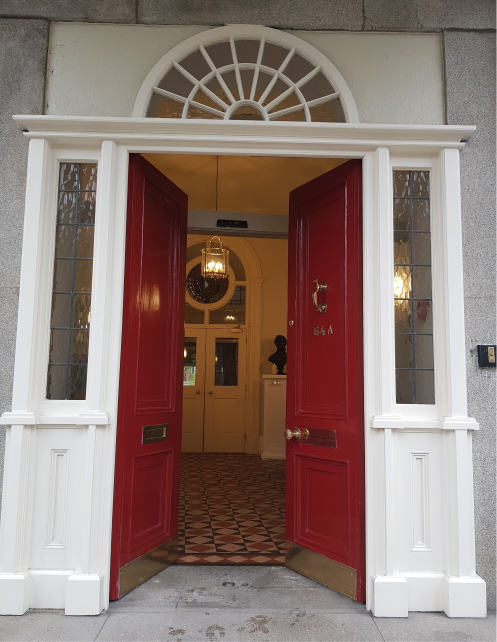
Catherine stood at the doors of a House of Mercy in Dublin. Today, we stand among communities in different parts of our world. Catherine encountered women and children whose circumstances threatened their dignity and future. Today, we encounter women and girls whose lives are shaped by poverty, insecurity and limited opportunities. The geography may have changed. Mercy has not.
What began on Baggot Street continues wherever a woman is listened to, wherever a girl is encouraged to remain in school, wherever an alumna discovers that her voice can influence her community, and wherever someone chooses to stand with the vulnerable rather than turn away.
The story is still unfolding
My story in South Sudan does not have a neat ending. It is still happening. I am still learning when to speak and when to listen; when to accompany and when to challenge; when to offer support and when to step back so that others can lead. Perhaps that is what makes this journey a true journey of Mercy.
Two hundred years after Catherine McAuley, we are still discovering what Mercy looks like in our time. For me, Mercy has a face. It is the face of the woman who needs someone to listen. It is the face of the girl who dares to dream of an education. It is the face of the alumna discovering that her own story can become advocacy for others. And it is the face of every person who chooses, in small and courageous ways, to make compassion visible in the world.
)
Mercy is still becoming what the world needs it to be
In the photo above, an alumna of Mercy Beyond Borders (MBB), a nurse by profession gives a health talk to her community on prevention of tuberculosis (TB) in the community. South Sudan is prone to outbreak of TB. Advocating for TB prevention has become a passionate activity among many MBB alumnae health professionals.
Mercy has travelled from Dublin to South Sudan and it is still becoming what the world needs it to be.
Scholasticah Nganda RSM
ENDS
)
Editor’s Note: Three very powerful examples of Mercy Beyond Borders in South Sudan. We are so grateful to Scholasticah for sharing such a beautifully written story.
Photos used with permission.