

First Sunday of Advent – 29th November 2026
Hope: the courage to believe in what is yet to come - Libby Blom
As we light the first candle on our Advent wreath, we reflect together on the theme of Hope.
Advent is a season of waiting, promise and hope. A season that invites us to pause amid the uncertainty of our lives and the world around us, to look beyond what is immediately visible and to trust what is yet to come. Hope sits at the heart of our Christian faith, shaping how we choose to live in the uncertainty of the present and sustaining us as we wait. I find myself wondering whether hope asks something more of us than the belief that things will get better.
Anne Lamott writes, “Hope begins in the dark, the stubborn hope that if you just show up and try to do the right thing, the dawn will come.” I am drawn to her description of hope as stubborn. The word suggests a quality of persistence, a determination to keep going even when the way ahead is unclear. Sometimes hope is simply the decision to keep listening, to act with compassion and to believe that our small contributions matter, even when we cannot see the difference they make.
There are seasons when the darkness is very real. We encounter suffering, injustice and division. We witness people carrying burdens that are not always visible to others. We experience uncertainty in our own lives and sometimes struggle to recognise where God is in the midst of it all. Hope gives us the courage to face these realities and to trust that God’s presence remains with us.
Christian hope is grounded in the belief that God’s love is greater than the circumstances that confront us. This belief allows us to acknowledge what is broken while holding onto the possibility of renewal. Advent places us in the space between promise and fulfilment, inviting patience, trust and attentiveness as we wait. Hope is a gift we receive, a grace that sustains us when the way forward remains unclear.
Hope also finds expression in the way we live and in the choices we make. I have been thinking about where hope lives in difference: in how we respond to people whose experiences, beliefs or perspectives differ from our own. The Gospel continually draws us towards the other: the stranger, the marginalised and those whose experiences challenge our own assumptions. Hope grows when we move from me first to us together. Such a movement calls us to listen more deeply, recognise the dignity of each person and make room for voices that have too often been excluded. Inclusion is essential to building a more just and compassionate world.
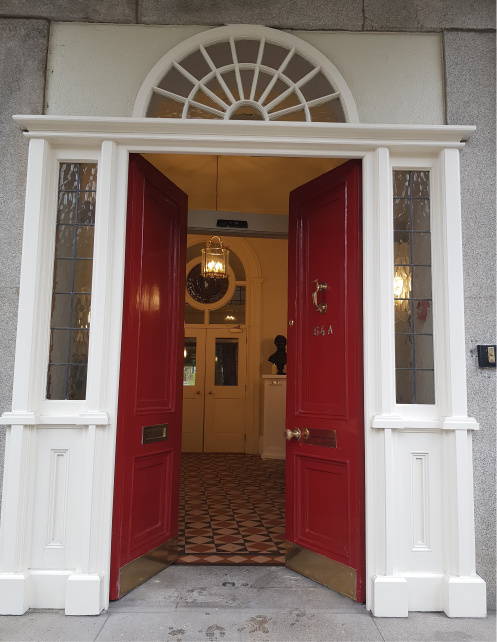
Catherine McAuley understood the importance of giving hope practical expression. As we journey towards the 200th anniversary of the opening of the House of Mercy on Baggot Street, Dublin, in 24 September, 1827, I find myself reflecting on the hope embodied in Catherine’s response to the world around her. She recognised the needs of those experiencing poverty and disadvantage and set about creating a place of education, refuge and welcome. The House of Mercy became a practical expression of her belief in the dignity and worth of people so often overlooked by society.
Through my years of working in Mercy formation, I have had the privilege of exploring Catherine’s story with people across Mercy ministries. Those experiences have deepened my understanding of how Catherine’s life gave rise to the Mercy charism, a living expression of faith that continues to call us into response to the needs of our own time.
In the Dublin of her time, Catherine witnessed poverty, inequality and the limited opportunities facing women and girls. Her hope took shape in a house, in relationships and in a willingness to stand alongside those who were suffering. Her example invites us to consider where we are being called to respond today. Where are people excluded? Whose voices are missing? Where might our listening, our courage or our action create a place of welcome and possibility? Each of us can make room for another person, open doors that have been closed and help someone discover they belong. Hope can begin with one person, one response and one courageous act of love.
As we prepare to celebrate the birth of Christ, may we remember that the light we await is also a light we are called to carry; that hope is both a promise we receive and a responsibility we share. May we have the humility to recognise God in unexpected places, the courage to be merciful and the generosity to become a source of hope for others. And perhaps, in the midst of all that remains unfinished, we might discover that the dawn is already beginning.
May we have the humility to recognise God in unexpected places, the courage to be merciful and the generosity to become a source of hope for others.
And perhaps, in the midst of all that remains unfinished, we might discover that the dawn is already beginning.
ENDS
Libby Blom is a Brisbane-based formation facilitator, writer and founder of Still Listening. A 2024 Mercy Emerging Leaders Fellowship (MELF) alumna, she works across Catholic ministries in charism, supervision, leadership and formation.
